





Any spin of a slot reel, any card dealt in digital blackjack, and every roll of virtual dice rests on a piece of software most players never see. That software is the Random Number Generator, or RNG. We often accept it blindly, assuming the game is fair simply because it loads on our screen. Yet understanding how an RNG works changes a casual session into an informed experience. For players exploring platforms like Candybet Casino bonuses in the UK, grasping this mechanism is the first step toward genuine confidence in the games. It separates myth from mathematics and luck from blind trust.
RNG systems Across Various Game Categories
All games use RNGs in the same way, and the distinctions matter for your strategy. For online slots, the RNG sets the stopping position of each virtual reel independently. Contemporary video slots often include multiple paylines, cascading symbols, and bonus wheels. Each of these elements relies on separate RNG calls. The base game outcome is one number, but the trigger for a free spins round or the result of a pick-and-click bonus utilizes additional random draws. We note that players who understand this separate determination stop believing myths like “the bonus round is pre-chosen to lose.”
Table games show a different application. With digital roulette, the RNG produces a number between 0 and 36, mimicking the physics of a ball landing in a pocket. The algorithm is calibrated so that each number has an equal 1 in 37 probability on a European single-zero wheel. For blackjack, the RNG mimics a continuously shuffled deck. Every card dealt is drawn from a full set of 52 cards, making card counting impossible in RNG-based versions. This is a critical distinction from live dealer games, where physical cards are drawn from a shoe and counting remains theoretically possible until the shoe is reshuffled.
Video poker machines functions on a similar principle but with a difference. The first five-card draw is generated by an RNG emulating a shuffled 52-card deck. When you hold cards and draw new cards, the RNG selects the other cards from the residual deck. The odds precisely match a real deck, assuming the software is faithfully programmed. This means ideal strategy charts created for physical devices are perfectly applicable to their digital counterparts. The RNG is indifferent to which cards you threw away. It simply completes the hand from the remaining pool, making video poker one of the most transparent applications of random generation.
Instant games and scratch-offs use RNGs to determine outcomes in advance at the point of purchase. The reveal animation is visual. The prize is already assigned by the RNG when you purchase the ticket, with the whole batch designed to return a particular percentage across many tickets. Realizing this avoids the misconception that a alternative scratching method could uncover a better prize. The result is cryptographically sealed. In all these categories on a well-stocked platform, the RNG acts as the hidden dealer, and its operation is precisely tailored to the mathematical model of each game type.
The method Independent Testing Laboratories Certify Fairness
An RNG is solely as trustworthy as the audit behind it. No reputable UK-facing platform counts on in-house assurances alone. Instead, operators send their RNG systems to accredited independent testing laboratories. Organisations like eCOGRA, iTech Labs, and Gaming Laboratories International conduct exhaustive statistical analyses to validate that the outputs are unpredictable, unbiased, and non-repeatable. We view these certificates as the single most important document a casino can hold. Without them, the promise of fairness is simply a marketing slogan with no technical backbone.
The testing process is rigorous and multi-layered. Technicians inspect the source code to confirm there are no hidden routines that could advantage the house beyond the stated house edge. They run billions of simulated game rounds to assess for deviations from expected statistical distributions. A chi-squared test might be applied to ensure that card values in blackjack appear with equal frequency, while a runs test looks for patterns that could indicate a flawed algorithm. If a slot claims a 96 percent RTP, the lab validates that over millions of spins the actual return falls within an acceptable confidence interval around that figure.
Verification is not a one-time event. Labs require ongoing monitoring or periodic re-certification to uncover any drift in performance triggered from software updates or hardware changes. When you visit a platform like Candybet Casino, the footer or dedicated fairness page should display badges or links to active certificates. We suggest clicking these. They typically lead to a live report verifying the current status of the RNG audit. A valid certificate means the games operate as advertised and that the operator cannot alter the payout percentages on a whim after the test is complete.
For UK players, cbc.ca this layer of oversight is bolstered by the Gambling Commission’s technical standards. The regulator stipulates that remote gambling equipment, including RNGs, be tested against specific requirements before deployment. This dual layer—independent lab certification plus statutory regulation—creates a safety net. It ensures the digital deck is not stacked in a way that violates the advertised rules. When we assess any casino’s integrity, we look first at whether these testing seals are present and verifiable, because they convert abstract mathematics into enforceable accountability.
The reason RNG Integrity Impacts Your Bankroll and Strategy
Understanding RNG integrity directly shapes how you manage your money. If you believe in the gambler’s fallacy—that past losses render a future win more likely—you might boost your bet size pursuing a non-existent due payout. This behaviour can accelerate losses beyond your planned budget. When we acknowledge that each spin or hand is independent, we can set fixed session limits based on the true odds and the house edge, rather than on emotional reactions to a losing streak. A clear-eyed view of randomness supports disciplined bankroll management, which is the single most effective tool a player has.
The house edge is the mathematical fee you incur for entertainment. In European roulette, the edge is 2.7 percent because the zero does not return on even-money bets. The RNG maintains this edge not by cheating, but by simulating a wheel where the zero appears exactly as often as any other number over time. Your strategy should factor in this built-in disadvantage. No betting system—Martingale, Fibonacci, or otherwise—can overcome a negative expectation game in the long run. The RNG guarantees that the statistical drift will eventually consume a finite bankroll if you play indefinitely, regardless of how cleverly you organize your wagers.
For games with a expertise element, such as video poker or blackjack, RNG fairness becomes even more essential. In blackjack, the house edge is based on you are playing perfect basic strategy. If the RNG were biased, your strategic decisions would be based on false probabilities. A certified RNG provides that the expected return of a perfect strategy matches the theoretical return listed for that variant. This allows you to practice and apply strategy charts with assurance. On a platform featuring a wide range of table games, we suggest checking the specific paytables and rules, as these interact with the RNG to produce the final return percentage.
We also take into account the psychological benefit. Knowing the games are independently verified lessens the anxiety that can accompany a losing session. You can attribute the result to variance rather than foul play. This perspective encourages a healthier relationship with gambling. It recasts the activity as a form of paid entertainment with a known cost, rather than a battle against a potentially rigged system. The transparency provided by RNG certification allows you to focus on the aspects of play you can control: game selection, stake sizing, and the discipline to walk away when the entertainment budget is spent.

The impact of RNGs in shaping the entire Experience
Apart from the raw mathematics, RNGs shape the rhythm and excitement of digital play. The speed of modern RNG-based games is an element of their appeal. A slot spin resolves in under a second, permitting a high volume of decisions per hour. This pace is only possible since the RNG operates without physical constraints. There is no dealer shuffling, no ball to spin, no mechanical reel to stop. The algorithm delivers instant outcomes, which produces a distinct tempo compared to live dealer tables. For players who like quick sessions on mobile devices during a commute or a break, this efficiency is a core part of the value proposition.
The integration of RNG technology with mobile platforms warrants particular attention. A smartphone’s processing power is more than sufficient to run certified RNG algorithms natively, but most UK-facing platforms process the generation server-side for security. The device simply displays the result. This architecture means you get the same certified randomness if you are playing on a high-end desktop or a mid-range Android phone. The experience is consistent across devices because the RNG is not dependent on your local hardware’s entropy sources. This uniformity is crucial for players who move between devices throughout the day.
RNGs also facilitate game mechanics that would be unattainable in the physical world. Cascading reels, where winning symbols vanish and new ones fall into place, require multiple sequential random draws in a fraction of a second. Megaways mechanics, with their variable reel heights and hundreds of thousands of paylines, rely on the RNG to determine both the reel configuration and the symbol placement simultaneously. These innovations have transformed slot design from simple three-reel machines into complex entertainment products. The RNG is the silent engine that makes this creative explosion technically feasible and reliably fair.
We view the overall experience as a partnership between certified mathematics and responsible play. The operator supplies a library of games powered by independently verified RNGs, supports them with secure payment methods and responsive customer service, and maintains a licence that demands transparency. The player offers an understanding of how randomness works, defines personal limits, and regards the outcomes as entertainment rather than income. When both sides uphold their end, the RNG becomes not a mysterious black box to be feared or mythologised, but a neutral arbiter that provides exactly what it promises: a fair shot at a purely random result, every single time.
What exactly a Random Number Generator Really Does
At its core, a casino RNG is an algorithm created to produce a sequence of numbers that lacks any predictable pattern. These numbers correspond directly to game outcomes. In a digital slot, the moment you press spin, the RNG chooses a value that the game software translates into a specific arrangement of symbols on your screen. The visual reels are merely a depiction of a decision made in milliseconds. We must understand that the spinning animation is for entertainment. The result already stands the instant you click the button, determined purely by that generated number and the game’s paytable mapping.
Modern RNGs do not work on a simple cycle that repeats every few thousand spins. They use complex mathematical formulas, often based on cryptographic hash functions or Mersenne Twister algorithms, to generate sequences so enormous they exceed human comprehension. A typical generator might have a period length—the number of values it produces before theoretically repeating—that stretches into numbers with thousands of digits. This means that within a single gaming session, or even across a lifetime of play, you will never come across a genuine algorithmic loop. The machine is not “due” for a win because it never remembers what it generated a moment ago.
The output is also evenly distributed. Over an exceptionally large sample, every conceivable number in the set has an equal chance of appearing. This does not ensure short-term balance. A slot designed with a 96 percent return-to-player rate will not pay back exactly 96 pence for every pound in a single evening. It will exhibit wild volatility in the short run while moving toward its theoretical expectation only over millions of spins. The RNG secures the unpredictability of each individual event, not the balancing of your personal balance.
We should also separate between true randomness and pseudo-randomness. Casino RNGs are technically pseudo-random because they start from a seed value and follow deterministic steps. However, the seed is often obtained from truly unpredictable physical sources, such as atmospheric noise or hardware entropy, making the sequence practically indistinguishable from genuine randomness. Regulated jurisdictions require that the seed cannot be impacted by the operator or the player. This foundational principle assures that neither the casino nor you can manipulate the outcome once the algorithm is validated and running.
Popular Myths and False Beliefs Explained
The most common myth we encounter is the notion in hot and cold cycles. Players often think a slot that has not paid out for an hour is “cold” and should be shunned, or that a machine that just hit a jackpot is “hot” and will continue paying. The RNG has no memory. Each spin is an separate event with the same likelihood of winning as the spin before it. A coin flipped ten times that lands on heads each time still has a 50 percent chance of landing on heads on the eleventh flip. The machine does not owe you a win, and a recent jackpot does not drain its ability to pay again immediately.
Another prevalent fallacy relates to the stop button or skill-stop feature found on some slots. Players assume that timing the press of the stop button can influence the outcome. In reality, the RNG has already decided the result the moment you began the spin. The stop button simply pauses the animation early, displaying the pre-selected outcome faster. It provides no strategic advantage whatsoever. We view this a user-interface feature designed for engagement, not a control mechanism that overrides the random generation process. The illusion of control is powerful, but mathematically insignificant.
Bonus buy features also generate confusion. When you buy direct entry into a bonus round, some believe the RNG behaves differently because you paid a premium. The algorithm does not modify its fundamental operation. The bonus round outcomes remain determined by the same certified RNG, with the same statistical distribution. The only difference is that you skipped the base game grind. The expected value of the bonus round relative to its purchase price is still decided by the game’s overall math model. The RNG handles a bought bonus no differently from a naturally triggered one.
Finally, the idea that casinos can flip a switch to restrict or loosen games in real time is largely fiction in regulated markets. Modifying a game’s RTP requires a software update that must be re-certified by the testing lab and approved by the regulator. It cannot be done in real time based on eurosport.com who is playing or whether it is a weekend. While some server-based game systems allow remote configuration, the permissible range is fixed and audited. On a UK-licensed site, the RTP you see in the game rules is the RTP that the RNG is adjusted to deliver over the long run, with no secret tampering behind the curtain.
Ways to Check RNG Integrity on a Gambling Platform
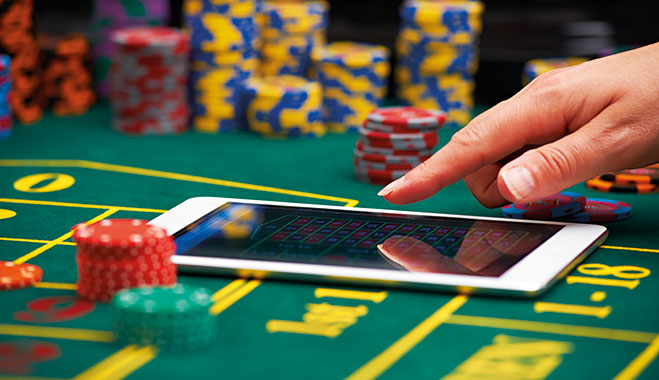
Before depositing a single pound, we advise a fast but comprehensive fairness audit of the platform. Begin by moving to the website footer. Search for logos from eCOGRA, iTech Labs, GLI, or similar accredited bodies. These ought to be clickable and lead to a active certificate or a in-depth report page. A still image that is not clickable is a cause for concern. The certificate must list the exact URL or brand name, verifying it relates to the site you are currently visiting. In case the certificate is expired or references a other operator, the fairness claims are unsubstantiated.
Then, find the platform’s licensing information. For UK players, the Gambling Commission licence number must be visible clearly, generally in the footer or within an “About Us” section. You can verify this number on the Commission’s public register to ensure the operator is licensed to deliver RNG-based games. This register also displays any regulatory actions or sanctions. A current licence indicates the operator has met fit and proper tests and is under ongoing compliance checks that cover RNG integrity. This is your most robust consumer protection layer.
Inside individual games, search for a help or information icon, commonly depicted by an “i” or a question mark. This ought to open the game rules and show the theoretical return to player percentage. Compare this figure to the developer’s published RTP for that title. Some operators provide games in multiple RTP configurations, and the rules screen must reflect the specific version being served. If a slot is promoted at 96 percent but the in-game help shows 94 percent, the platform is using a lower-paying variant. This is lawful but needs to be transparent. The RNG will accurately produce whichever RTP is established.
Finally, evaluate the platform’s responsiveness to fairness inquiries. Dispatch a message to customer support seeking details on the newest RNG audit. A capable support team should be able to guide you to the certificate or supply the name of the testing laboratory. Vague or general answers indicate a absence of commitment to transparency. On a well-run site, this information is treated as a benefit, not a secret. The whole process ought to take no more than a few minutes, and the answers you get will reveal you a significant amount about how seriously the operator considers the mathematical honesty of its product.